
How Breathwork Fits Into Everyday Wellness
Wellness can start to feel like one more thing on the list.
There is always another habit to build, another routine to follow, another way to “do wellness better.” For many people, that pressure can make self-care feel harder to maintain in real life.
That is one reason breathwork is becoming part of more everyday wellness routines. It is simple, accessible, and flexible enough to fit into ordinary moments. You do not need a perfect morning routine or a full hour of free time. Breathwork can be woven into the rhythm of daily life.
At Blissful Heart Wellness Center in Bend, Oregon, breathwork can be part of a more grounded, whole-person approach to wellness. It can support the way you move through your day, reconnect with your body, and create space for more intention.
What Is Breathwork?
Breathwork is the practice of breathing with awareness and intention. Some techniques are designed to help you slow down and settle your body. Others can help with focus, regulation, and a stronger sense of presence.
One of the most accessible forms is diaphragmatic breathing, sometimes called belly breathing. This type of breathing encourages the body to use the diaphragm more fully, which can support slower, deeper breathing patterns and a calmer state overall.
Why Breathwork Fits Into Everyday Wellness
Part of what makes breathwork so useful is that it does not have to be complicated. It can be practiced in short windows of time and can support transitions throughout the day.
Research suggests breathwork may help improve stress and broader mental health outcomes, although experts also note that the evidence should be interpreted thoughtfully and without hype. Clinical guidance also notes that the pace of the breath matters more than trying to take overly deep breaths, and that regular practice helps build a calmer breathing style over time.
That makes breathwork a strong fit for everyday wellness because it can help you:
• pause when your thoughts feel crowded
• reconnect with your body when you feel scattered
• create a transition between work, home, and rest
• support steadiness before a stressful moment
• build a wellness practice that feels realistic to maintain
Everyday Wellness Does Not Have to Be Extreme
Many people are stepping away from all-or-nothing wellness routines. Instead of trying to overhaul everything at once, they are looking for smaller practices they can return to consistently.
Breathwork fits that shift well. It is portable, simple, and can be used across many parts of the day. In other words, breathwork works well because it can live inside real life.
A Simple Guide to Bringing Breathwork Into Daily Life
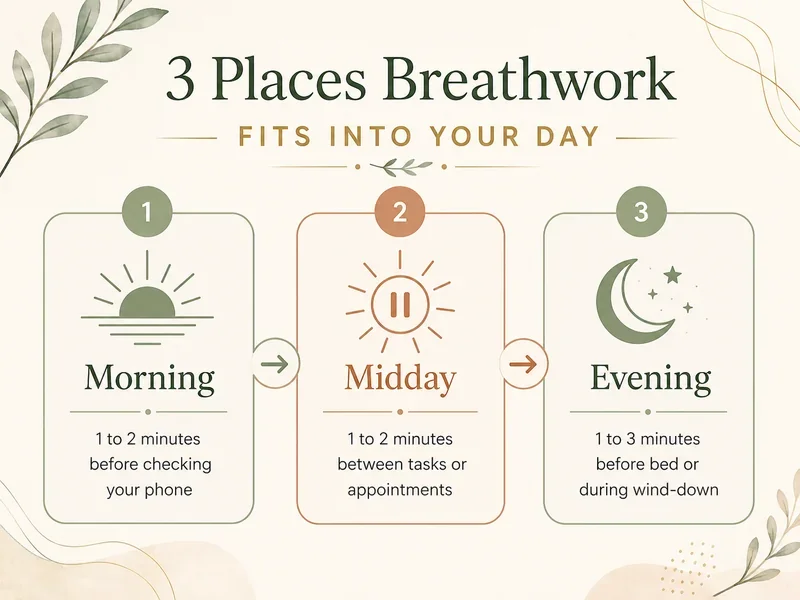
Breathwork in the morning, midday and evening
If you are new to breathwork, start small. The goal is not to perform it perfectly. The goal is to make it usable.
Step 1: Choose one anchor point in your day
Pick one part of your routine where breathwork can naturally fit.
• before checking your phone in the morning
• after parking your car before work
• between appointments
• after a stressful conversation
• before bed
Start with one anchor instead of trying to place it everywhere at once.
Step 2: Keep it short
You do not need a long session for it to be helpful. Start with 1 to 3 minutes.
If you want a longer structured practice, many clinical handouts suggest about 5 to 10 minutes, and some recommend practicing twice daily as a training routine over time.
Step 3: Focus on slower, steadier breathing
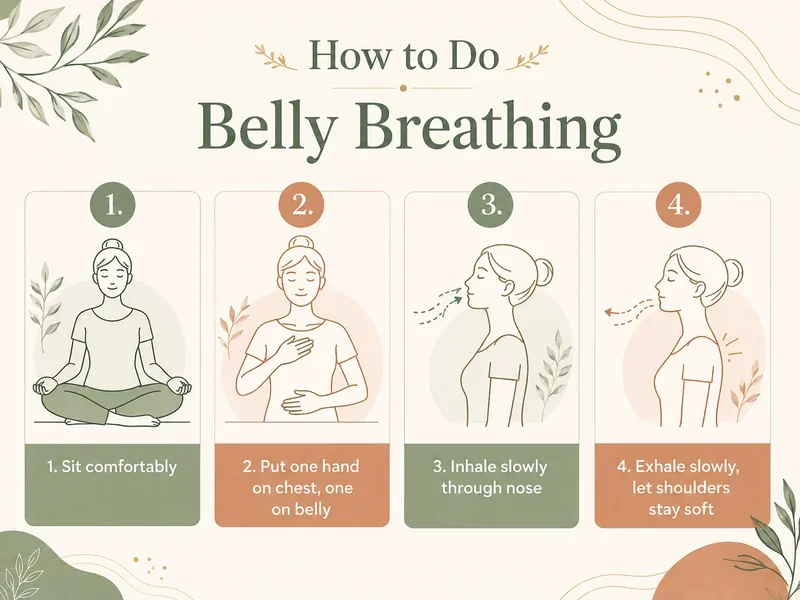
How to Belly Breathe
A helpful cue is to let the belly expand as you inhale and soften as you exhale.
1. Sit comfortably with your shoulders relaxed.
2. Place one hand on your chest and one on your belly.
3. Inhale slowly through your nose. Let the belly rise more than the chest.
4. Exhale slowly and fully.
5. Continue for several rounds at an easy, comfortable pace.
Guidance from the University of Michigan notes that the speed of the breath is more important than making the breath very deep, and recommends avoiding the urge to “catch” your breath with oversized inhales.
Step 4: Use it as support, not pressure
Breathwork is not something you have to “get right.” Think of it as a tool you can return to.
Breathing exercises are best used to help you through a tough situation or as an ongoing daily practice, rather than expecting them to instantly erase stress on command.
3 Easy Ways to Practice Breathwork in Everyday Life
1. Morning reset
Before you jump into messages, tasks, or the day’s mental noise, take a minute or two to settle into your breath. This can create a steadier start to the day.
2. Midday transition
Use breathwork between tasks, after work, or between errands. This can help you shift from one mode to another instead of carrying the same tension forward.
3. Evening wind-down
A few minutes of slower breathing can become part of your bedtime routine, especially if your body still feels “on” at the end of the day.
A Beginner Breathwork Routine You Can Try
2-Minute Everyday Breathwork Practice
Minute 1
• Inhale through the nose for a comfortable count of 4
• Exhale slowly for a comfortable count of 5
• Let your shoulders stay relaxed
Minute 2
• Keep the same steady rhythm
• Notice your belly rise on the inhale and soften on the exhale
• Let your attention stay with the breath
If counting feels stressful, skip the numbers and simply aim for a slower inhale and a longer, softer exhale.
How to Know If Breathwork Is Working for You
Breathwork does not always create a dramatic feeling. Sometimes the signs are subtle.
• less rushing in your body
• a clearer pause before reacting
• more awareness of tension
• an easier transition into rest
• a stronger connection to the present moment
Those smaller shifts matter. Everyday wellness is often built through repeatable practices, not big breakthroughs.
When to Slow Down or Get Support
If breathwork leaves you light-headed, strained, or uncomfortable, ease up. That can be a sign of trying too hard or over-breathing.
For some people, breathwork feels more supportive with guidance, especially if they are dealing with high stress, trauma, panic, or a lot of body tension. In those cases, working with a trained practitioner can be a more comfortable place to start.
Breathwork as Part of a Holistic Wellness Practice
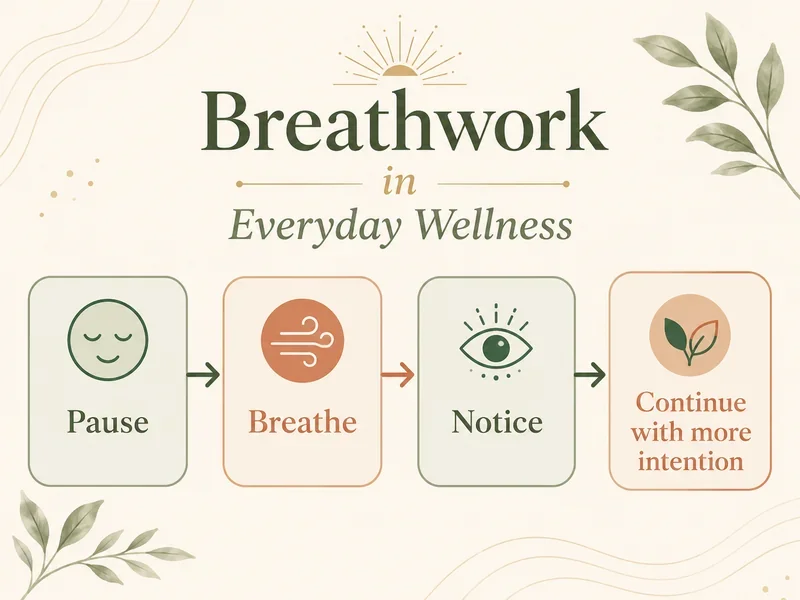
Breathwork can be simple
Breathwork does not have to stand alone. It can complement massage therapy, counseling, yoga, meditation, and other holistic wellness services.
That is one reason it fits so naturally into a wellness center setting. It supports the connection between mind, body, and daily life. It can be both simple and meaningful.
If you are exploring holistic wellness in Bend, Oregon, breathwork can be a practical place to begin. At Blissful Heart Wellness Center, it can be part of a broader approach that supports how you feel, how you move through your day, and how you care for yourself in a more sustainable way.
Conclusion
Breathwork fits into everyday wellness because it meets people where they are.
It does not require a dramatic lifestyle shift. It can begin with one pause, one moment of awareness, one steady breath at a time. And over time, those smaller moments can become part of a wellness routine that feels more grounded, supportive, and real.
Sources
https://psych.med.umich.edu/anxiety-program/pdf/Slow-Diaphragmatic-Breathing.pdf
https://www.va.gov/WHOLEHEALTHLIBRARY/tools/diaphragmatic-breathing.asp