
A Holistic Wellness Guide for Central Oregon Smoke Season
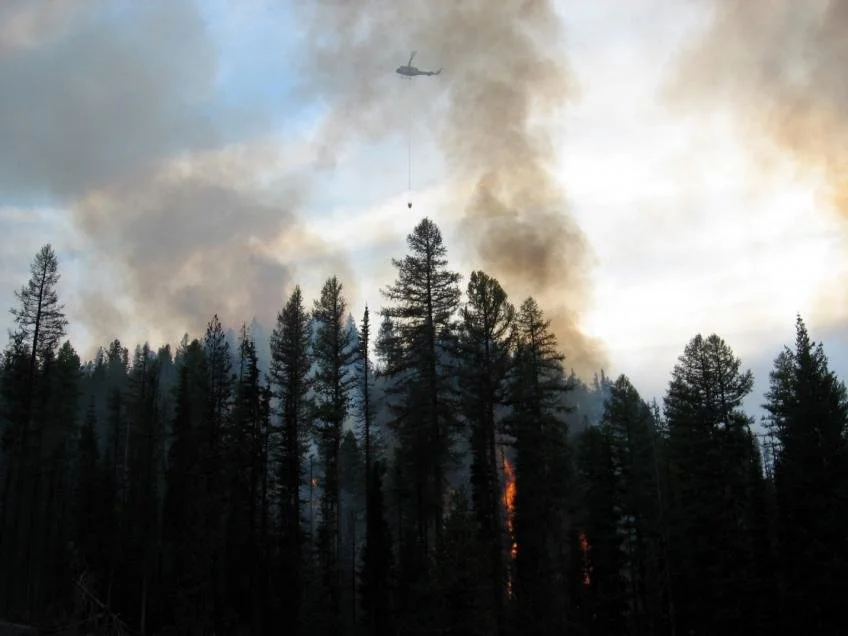
Photo courtesy of the USDA Forest Service.
Summer in Central Oregon often calls us outside. We hike forest trails, gather beside the river, tend our gardens, and enjoy the long golden evenings that make Bend feel so special.
Then the smoke arrives.
Wildfire smoke can shift our routines quickly. A morning walk moves indoors. Windows stay closed on a warm afternoon. The mountains disappear behind a hazy sky. Along with the physical effects, smoke season can bring frustration, restlessness, worry, and a sense of disconnection from the natural spaces that usually help us feel grounded.
This season has brought those concerns close to home. Central Oregon entered late July with several large fires burning at the same time, changing air quality, travel plans, evacuation zones, and the daily rhythm of communities across the region.
Central Oregon Fire Update: July 27, 2026
- Oregon had more than 34 active large fires burning statewide, covering more than 1 million acres. State officials described conditions as similar to what they would normally expect in August.
- The Bench Fire near Warm Springs grew beyond 6,200 acres and prompted Level 3 evacuation orders. Homes were lost, Highway 26 experienced closures, and thousands of residents were affected by rapidly changing evacuation information.
- The Akawa Butte Fire near Sisters had burned more than 27,000 acres and remained 5 percent contained. Because of its proximity to populated areas, it was identified as the highest-priority wildfire in the country at the time of the update.
- Oregon DEQ issued an air quality advisory for Crook, Jefferson, Grant, Baker, Union, Wheeler, and Wallowa counties because of wildfire smoke. Official fire updates also warned that smoke from the Shingle Fire could affect Prineville, Paulina, Dayville, Mitchell, and nearby communities.
Fire size, containment, evacuation zones, road closures, and air quality can change quickly. Check official local sources before making decisions.
These developments are a reminder that smoke season wellness begins with practical safety. From there, holistic care can help us support our nervous systems, sleep, nourishment, movement, relationships, and emotional well-being during a stressful and unpredictable time.
Why Wildfire Smoke Affects the Body
Wildfire smoke is a changing mixture of gases and fine particles released as vegetation, buildings, and other materials burn. One of the greatest health concerns is PM2.5, a form of particle pollution small enough to travel deep into the lungs and, in some cases, enter the bloodstream.
Smoke exposure may cause eye or sinus irritation, coughing, wheezing, headaches, tiredness, chest discomfort, a scratchy throat, trouble breathing, or a rapid heartbeat. It can also worsen asthma, COPD, heart disease, and other chronic conditions.
Children, older adults, pregnant people, outdoor workers, and people with heart or lung conditions may be more sensitive to smoke. In June 2026, the Oregon Health Authority updated its youth activity guidance after reviewing evidence that children can be affected at lower smoke levels than previously understood. Everyone under age 18 is now considered sensitive to smoke, and outdoor youth activities should be canceled or moved when the AQI rises above 150.
1. Check the Air Before Planning Your Day
The sky and the smell of the air do not always tell the full story. Smoke may be present even when the mountains remain visible, and wind can move smoke into or out of a neighborhood within a short period of time.
Check the Air Quality Index through Oregon DEQ, the OregonAir app, or the AirNow Fire and Smoke Map before exercising, opening windows, taking children outside, or planning an extended drive.
AQI values from 0 to 50 are considered Good, while 51 to 100 is Moderate. At 101 to 150, the air is Unhealthy for Sensitive Groups. From 151 to 200, the air is Unhealthy for everyone, with higher categories indicating increasingly serious conditions.
A flexible smoke season plan may include:
Moving a walk, yoga practice, or workout indoors
Reducing the intensity or duration of outdoor activity
Rescheduling yard work and other strenuous tasks
Keeping children and pets inside when smoke increases
Checking TripCheck and county alerts before driving through fire affected areas
Changing your plans is a form of body awareness. It allows you to respond to the conditions of the day with care.
2. Create a Cleaner Air Sanctuary at Home
Your home can become a calming refuge during smoky weather. The Environmental Protection Agency recommends creating a cleaner air room in a comfortable part of the home where windows and doors can remain closed and the air can be filtered.
A properly sized portable air cleaner with a HEPA filter can help reduce smoke particles indoors. If you use a central HVAC system, ask a qualified professional which high efficiency filter is appropriate for your system and whether it can safely run in recirculation mode. Keep replacement filters available because filters may need to be changed more often during a prolonged smoke event.
Reduce activities that add particles to indoor air, including burning candles or incense, smoking or vaping, using aerosol sprays, vacuuming without a HEPA filter, and cooking for long periods over high heat.
Then add a few elements that help the room feel peaceful and lived in:
Soft lighting, pillows, and blankets
Books, puzzles, music, or art supplies
A yoga mat or meditation cushion
Water, nourishing snacks, medications, and device chargers
Simple activities that help everyone in the household settle
The practical purpose is cleaner air. The emotional purpose is a space that feels safe, calm, and supportive.
3. Adapt Movement and Breathwork to the Conditions
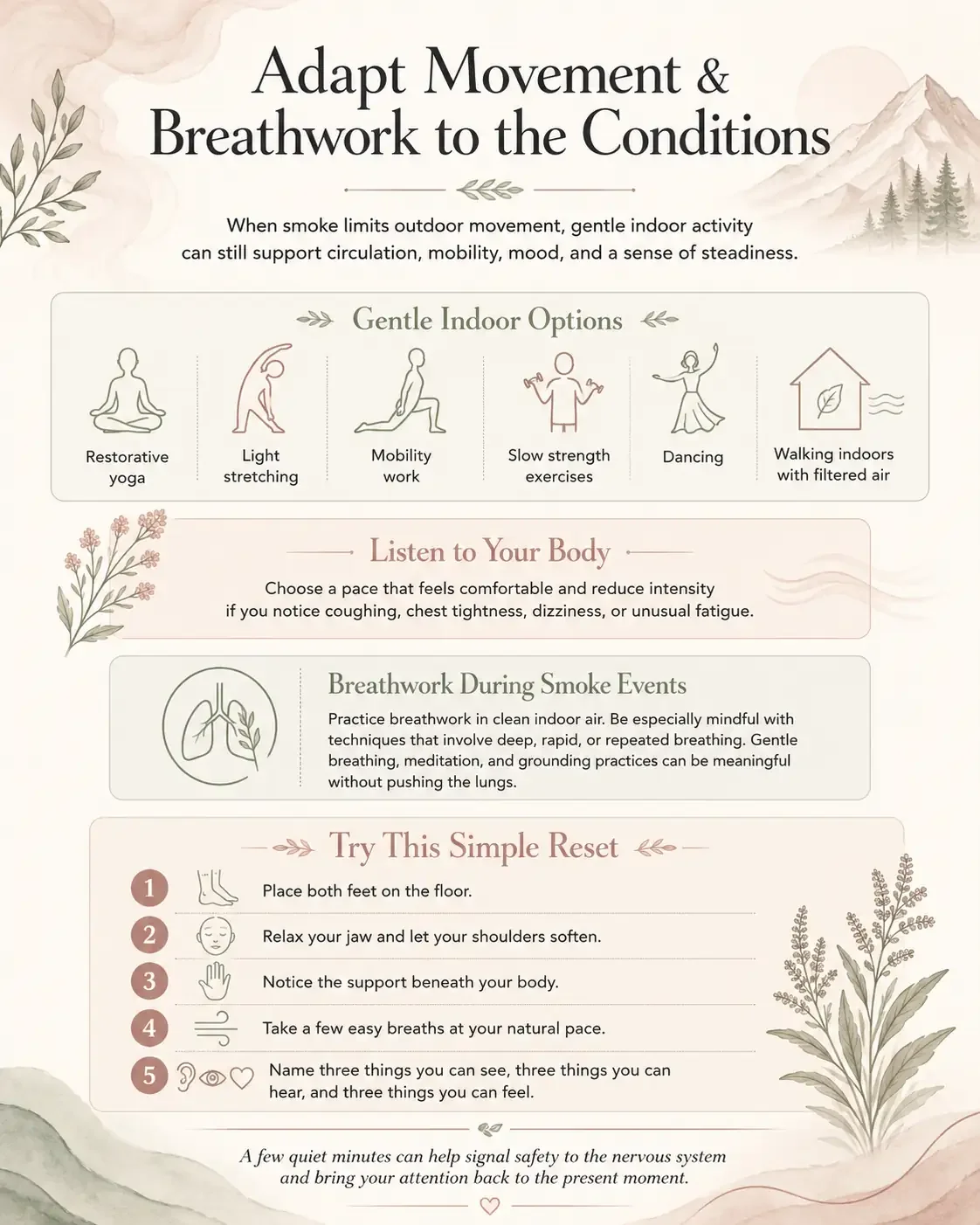
Many of us rely on walking, cycling, running, gardening, or hiking to clear the mind and reconnect with the body. When smoke limits outdoor movement, gentle indoor activity can still support circulation, mobility, mood, and a sense of steadiness.
Consider restorative yoga, light stretching, mobility work, slow strength exercises, dancing, or walking in a large indoor space with filtered air. Choose a pace that feels comfortable and reduce intensity if you notice coughing, chest tightness, dizziness, or unusual fatigue.
Breathwork should also be practiced in clean indoor air during smoke events. This is especially important for techniques that involve deep, rapid, or repeated breathing. Gentle breathing, meditation, and grounding practices can be meaningful without pushing the lungs.
Try this simple reset:
Place both feet on the floor.
Relax your jaw and let your shoulders soften.
Notice the support beneath your body.
Take a few easy breaths at your natural pace.
Name three things you can see, three things you can hear, and three things you can feel.
A few quiet minutes can help signal safety to the nervous system and bring your attention back to the present moment.
4. Keep Nourishment Simple and Steady
Smoke season can interrupt grocery trips, appetite, exercise routines, and meal planning. Keeping a few simple foods available can reduce decision fatigue and make it easier to nourish yourself consistently.
Build meals around practical basics such as fruits and vegetables, whole grains, beans, eggs, fish, poultry, tofu, nuts, seeds, soups, and easy prepared foods. Keep water nearby throughout the day, especially when smoky weather overlaps with summer heat.
Food cannot remove wildfire smoke from the body, but steady nourishment can support energy and help you care for yourself when routines feel disrupted. A nutrition professional can help create realistic options for dietary restrictions, low appetite, fatigue, or days when cooking feels overwhelming.
5. Care for the Emotional Weight of Fire Season
Wildfire season affects far more than air quality. Evacuation alerts, road closures, canceled plans, news updates, and uncertainty can activate the stress response. For people who have experienced previous fires or evacuations, smoke and sirens may also bring up difficult memories.
You may notice irritability, restlessness, trouble concentrating, sleep changes, increased worry, environmental grief, or a feeling of being trapped indoors. These responses make sense during a season that asks us to live with changing conditions.
Create a small daily rhythm that gives your nervous system predictability. Wake at a similar time, eat regular meals, connect with someone you trust, and include one activity that helps you feel present. Choose one or two trusted times to check fire updates rather than refreshing alerts throughout the day.
Counseling can provide a supportive place to process wildfire anxiety, uncertainty, previous evacuation experiences, or the emotional effects of spending more time indoors. Support may be especially valuable when worry begins affecting sleep, relationships, work, or daily functioning.
6. Make Space for Restorative Care
The body may feel different during smoke season. Headaches, tension, poor sleep, stress, and reduced activity can leave muscles feeling tight, heavy, or fatigued.
When you are breathing comfortably and feel well enough to attend an appointment, massage therapy may offer a quiet environment for relaxation and body awareness. Energy healing, meditation, hypnotherapy, and other restorative practices can also create moments of calm and connection during an unpredictable season.
These services support comfort and well-being. They do not treat smoke inhalation or replace clean air precautions and medical care. Reschedule an appointment if you are experiencing significant respiratory symptoms, feel acutely unwell, or need to remain close to home because of changing fire conditions.
7. Prepare Before Conditions Worsen
A little preparation can reduce stress when smoke or evacuation information changes quickly. Consider keeping the following items available:
· A portable air cleaner and replacement filters
· NIOSH Approved N95 respirators for adults who must go outside
· Several days of essential medications
· Water and easy to prepare food
· Pet food, carriers, leashes, and animal medications
· Copies of important documents
· Phone chargers and backup batteries
· A basic go bag and a list of evacuation routes
· Current county alert registrations and emergency contacts
A well fitted N95 can help reduce exposure to smoke particles when an adult must be outdoors. Surgical masks, cloth face coverings, bandanas, and neck gaiters do not offer the same protection from fine particle pollution. Respirators are not designed to fit young children, and people with heart or lung conditions should speak with a healthcare professional if respirator use makes breathing more difficult.
Preparation creates more room for calm, connection, and thoughtful choices when the day changes unexpectedly.
When to Seek Medical Care
Contact a healthcare professional for new or worsening symptoms, particularly if you have asthma, COPD, heart disease, diabetes, or another chronic condition. Follow any asthma or respiratory action plan provided by your clinician.
Seek urgent medical care for significant trouble breathing, chest pain, severe wheezing, confusion, fainting, blue or gray lips, a rapid or irregular heartbeat, or symptoms that continue to worsen even after moving into cleaner air.
Finding Your Rhythm During Central Oregon Smoke Season
Smoke season can change the shape of summer, but it does not have to take away every source of connection and care.
Check the air. Listen to your body. Create a peaceful indoor space. Nourish yourself consistently. Move in ways that match the day. Stay connected to the people who help you feel supported.
At Blissful Heart Wellness Center in Bend, our community of practitioners offers massage therapy, licensed counseling and mental health care, nutrition support, energy healing, hypnotherapy, breathwork, and holistic beauty services. Together, these practices can support a more grounded and compassionate approach to seasonal wellness.
Explore our practitioners and find the form of care that feels aligned with what your body, mind, and spirit need right now.
This article is for general educational purposes and does not replace medical advice, diagnosis, emergency instructions, or treatment from a qualified healthcare professional.
Sources and Local Resources
1. OPB / KLCC wildfire update, July 27, 2026
2. Akawa Butte Fire update, July 26, 2026
3. Shingle Fire update, July 27, 2026
4. Oregon DEQ air quality and advisories
5. OSFM current wildfire information
6. OHA 2026 youth smoke guidance
7. EPA 2026 smoke and health fact sheets
8. EPA Prepare for Wildfire Smoke, June 2026